

From better models to better in vivo CAR-T
Fine-tuning our models on proprietary CAR-T data produced mRNA designs that outperformed an already-optimized industry sequence in animals, clearing nearly all B cells at a dose where the benchmark achieved only partial depletion.
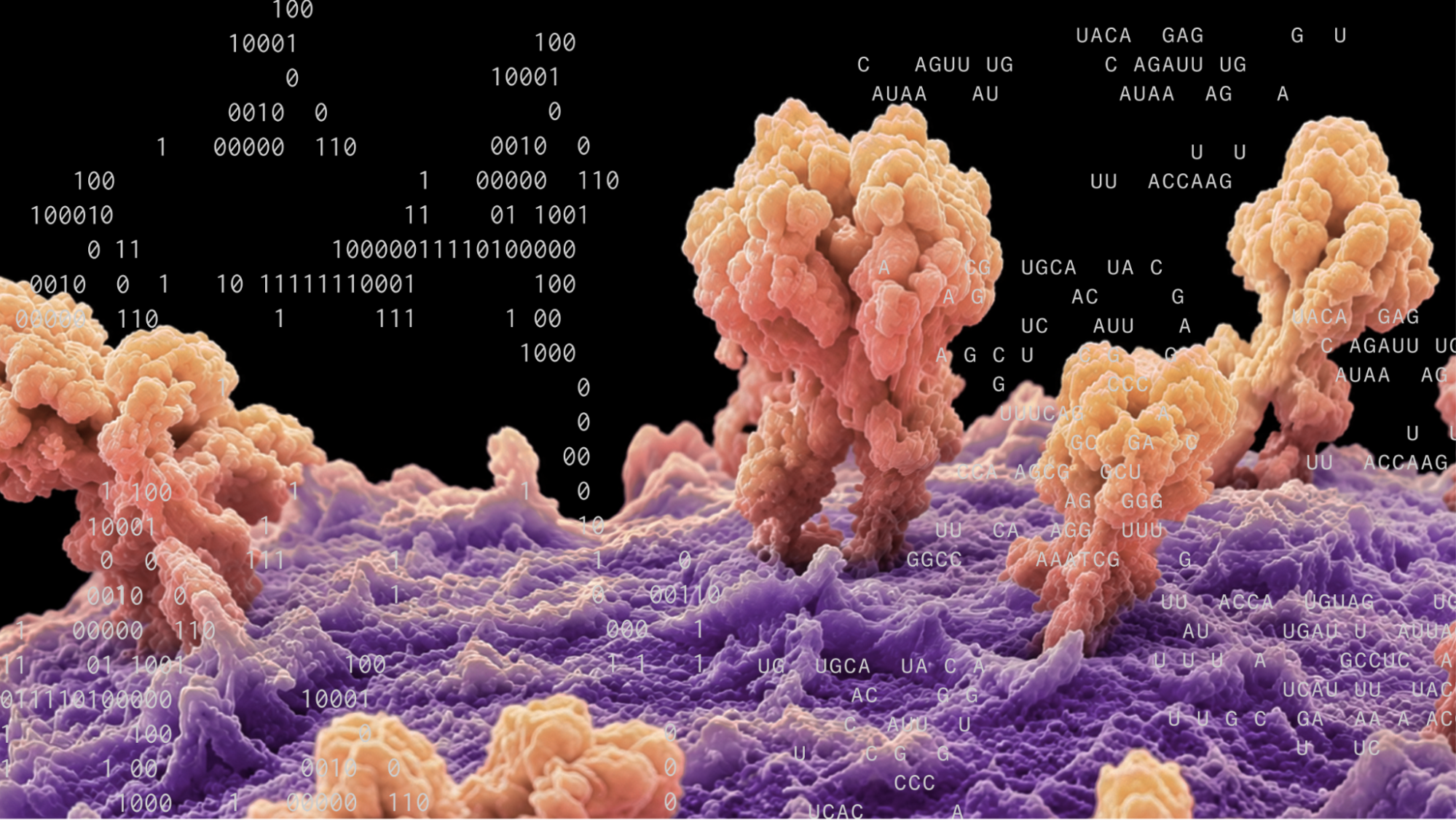
In lupus and many related autoimmune conditions, B cells produce antibodies against the patient's own tissue. Some patients have achieved drug-free remission through what’s known as an “immune reset,” by destroying all their B cells so the immune system can rebuild from scratch. In vivo CAR-T, a scalable form of the therapy that transformed the treatment of blood cancers, could make this reset available to the millions of people who need it.
In our last post, we showed that our zero-shot models designed competitive CAR-T mRNA without ever having been trained on CAR-T data. That led to our next question: what happens when we train them on it?
We took five sequences generated by our fine-tuned models into animals. Prior to testing in vivo, we expected four designs to outperform Capstan’s heavily optimized sequence and one to perform on par. The data largely validated these predictions: three designs outperformed, and the sequence predicted to match it did. The top design cleared nearly all B cells across all measured tissues, with three-fold higher CAR expression after 24 hours relative to the Capstan sequence. We take this as early validation of our ambition to make sequence design a matter of engineering: proposing candidates rather than screening for them.
Background
CAR-T therapy is one of the most consequential medical breakthroughs of the past decade. It has produced durable remissions in patients with B-cell cancers, and is now being trialed for autoimmune disease. It works by leveraging the patient’s own immune system, giving T cells new instructions about what to kill. For example, a T cell given a synthetic receptor (a CAR) for CD19, a protein carried by B cells, will hunt down every B cell it finds. B cells are the problem in both diseases: in B cell cancers they are the tumor, and in autoimmune diseases they produce the antibodies that attack the patient’s own tissue.
Traditional ex vivo CAR-T is bespoke: a patient’s T cells are collected, re-engineered over several weeks, and infused back. The process is expensive and difficult to scale. In vivo CAR-T therapy sidesteps all of this. An mRNA sequence, formulated in a lipid nanoparticle (LNP) targeted to T cells, is injected, and the patient’s cells build the CAR receptors themselves.
Same protein, different drug
Much of the field has focused on the sequence delivery vehicle: the LNP. But the drug is the whole assembly: courier and message together. The mRNA sequence both in and around the coding region (how the message is spelled, how it folds, what flanks it) determines how much CAR protein each T cell makes, for how long, and whether the cell’s innate immune sensors flag the message as foreign. Two mRNA sequences encoding the exact same CAR protein can behave like two entirely different drugs. This is the kind of design problem Inceptive was built for.
The rules of mRNA design are not yet well understood, and the data required to learn them doesn't exist in the public domain. Nearly everything published about RNA describes natural RNA, but therapeutics are synthetic and behave differently. To solve this, we built a lab to generate proprietary data, and AI models to learn from it.
Putting better models to the test
Over the course of several months, we refined our modeling stack and trained new sequence design models on CAR-T data we generated ourselves. As with any AI development effort, this training improved performance in silico. But biological sequence design is ultimately held to a much higher bar: how does it perform in a living organism?
We had our improved Inceptive models generate anti-CD19 CAR-expressing mRNA designs. While every design encoded an identical CAR protein, they could differ in UTRs, codon selection, and secondary structure: the regulatory instructions that dictate how the mRNA behaves in the cell.
We advanced five sequences into NSG-PBMC humanized mice. We ran these sequences against Capstan’s anti-CD19 sequence, a leading industry benchmark that is itself the product of extensive optimization. All sequences were dosed identically and formulated in a proprietary CD8-targeted LNP developed by our collaborators, Amplitude Therapeutics.
Better sequences yield deeper depletion
Because anti-CD19 CAR-T cells eliminate CD19+ B cells, the extent of B-cell depletion serves as a direct, functional readout of therapeutic activity in vivo.
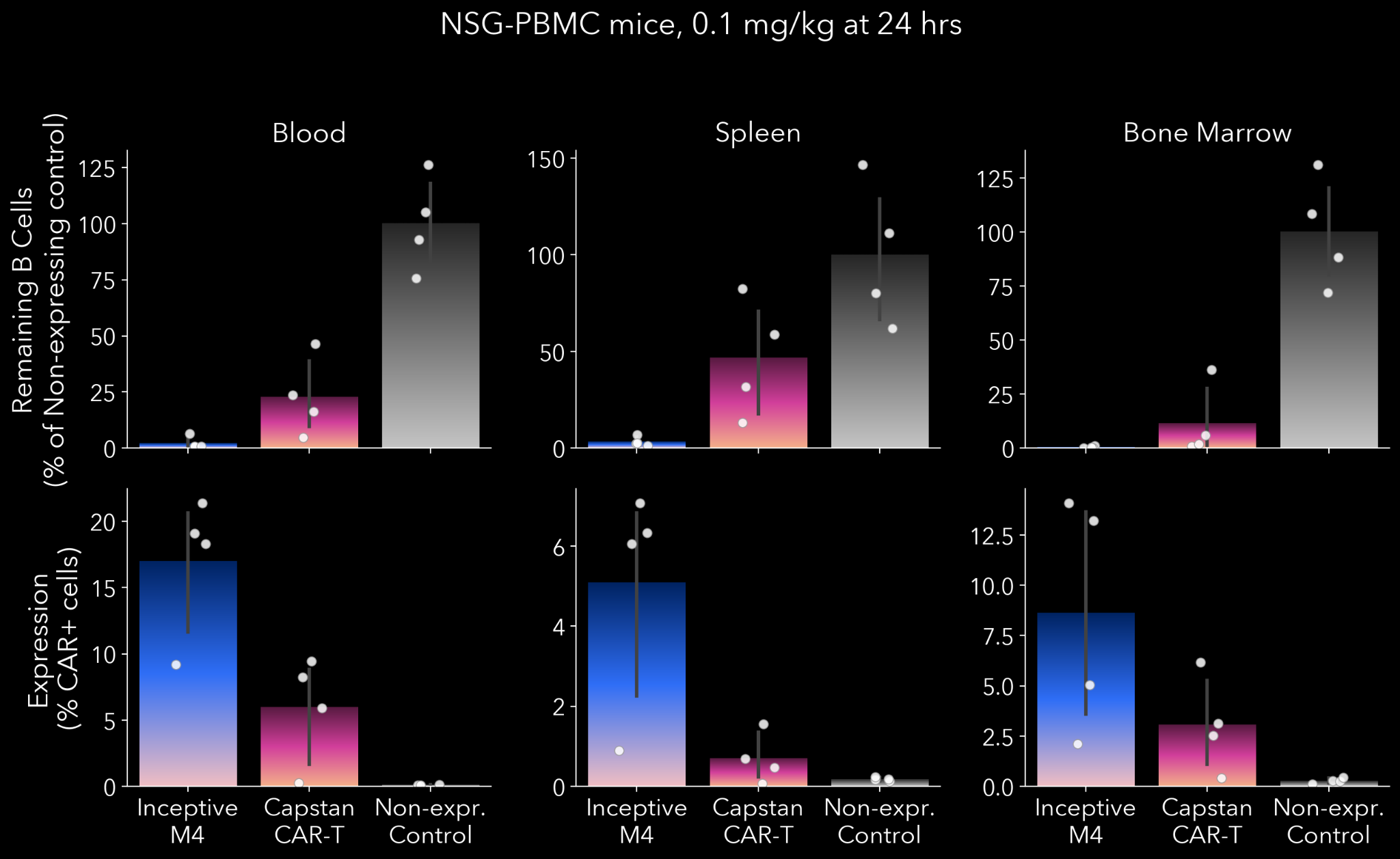
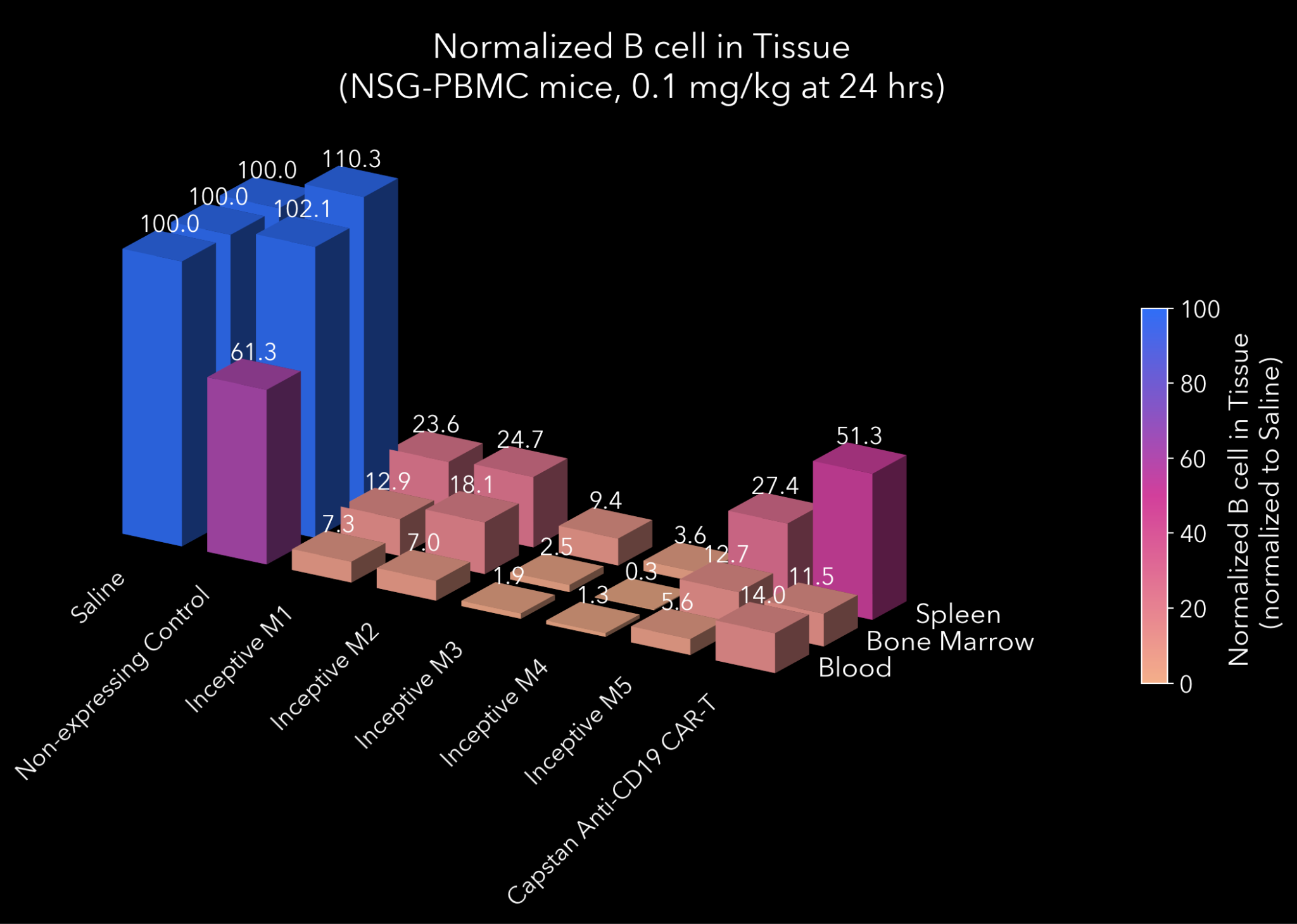
Our top model-generated design, M4, drove near-complete B-cell depletion across blood, bone marrow, and spleen. The bone marrow and spleen are reservoirs from which the B-cell population reseeds, so clearing these tissues is crucial for a durable immune reset. M4 cleared far more B cells from these tissues than Capstan’s construct.
Crucially, M4 was not an isolated success. Across the set of five model-generated designs we tested in vivo, three sequences substantially outperformed the industry benchmark with dramatically stronger B cell killing. This demonstrates our models can consistently generate high-performing therapeutic designs, rather than just getting lucky with a single exceptional sequence. It also validates our bet that models can reliably rank promising designs such that the traditional screening funnel collapses from thousands of candidates to a handful.
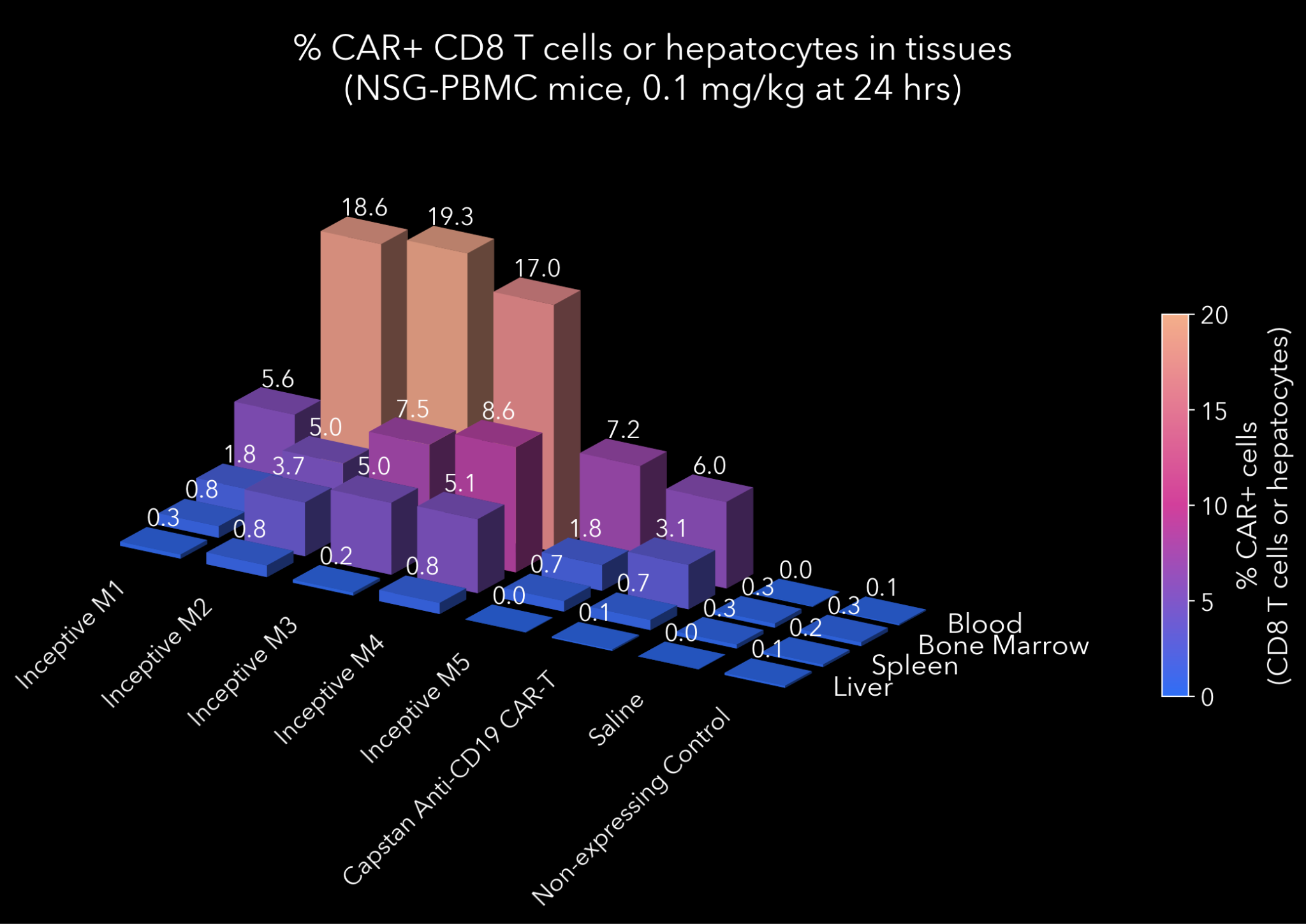
The same designs that produced the deepest B-cell depletion also generated several-fold higher populations of CAR+ T cells in vivo at 24 hours. We’re now looking into whether that reflects sustained expression, or a higher starting point, by running additional studies over longer timescales. The higher CAR+ T-cell levels observed are encouraging given the importance of sustained CAR expression for durable therapeutic activity.
Learning from life
While the performance of these individual designs is exciting, what matters most is the validation of our core philosophy: model improvements translate directly into better functional in vivo outcomes. Better sequences produced more CAR+ T cells, and more CAR+ T cells resulted in deeper B-cell depletion. We tested our platform on CAR-T, but the approach generalizes across modalities. In partnership with Alnylam, we’ve successfully applied the same design framework to siRNAs, where the design constraints differ but the underlying problem, navigating sequence space towards a defined functional target, is the same.
Designing effective therapeutic sequences will not be achieved by trying to explicitly model every biological parameter. Instead, our models learn directly from experiments that measure the therapeutic effect we ultimately care about, continuously fine-tuning the next generation of models.
What's next?
Medicines are still mostly discovered rather than designed. Changing that requires training models on biological data that doesn’t yet exist, measured at scale and on synthetic molecules evolution hasn’t yet stumbled on.
Science has only explored a tiny fraction of the space of all biological data, so we’ve developed models that can help us collect it more effectively. A coming post will describe models that predict how a design will perform before it is made.
Authors: Alexander Hawkins-Hooker, Benedetta Bernasconi, Camille Bayas, Carin Rahmberg, Charles Limouse, Christopher Alford, Denny Ha, Dan Cao, David Feldman, Dirk Weissenborn, Edmundo Vides, Fernando Pereira, Gabriela Roman, Henning Meyer, Herschel Dhekne, Ibrahim Abdullah, Jamey Iaccino, Jean-Baptiste Cordonnier, Jakob Uszkoreit, Jimin Park, Jonathan Ronen, Karin Schöfegger, Kevin Green, Kyle Fukui, László Lukács, Lily Blair, Marie Teng-Pei Wu, Monique Kerstens, Noha Radwan, Parissa Monem, Pratima Rao, Rico Jonschkowski, Rishi Misra, Sheena Yiu, Shengya Cao, Tara Basu Trivedi, Tamson Moore, Thomas Lozanoski, Tibor Rothschild